
Common Areas in an Ontario Condo: What Every Board Should Understand
(From a Condominium Management Expert)
Practical Guidance for Smarter Governance in London & Sarnia, Ontario
If your board has ever received an angry email from an owner insisting that their cracked balcony, foggy window, or leaking pipe is the corporation's problem to fix, you already know how fast a simple repair turns into a standoff. The argument almost always comes down to one question boards are rarely trained to answer: is this a common element, or is it part of the owner's unit?
Getting that boundary right matters, because it decides who pays, who arranges the work, and whose insurance responds. This guide explains what common areas are under Ontario law, how they differ from units and exclusive-use areas, and how a well-run condo corporation keeps these lines clear long before a dispute ever starts.
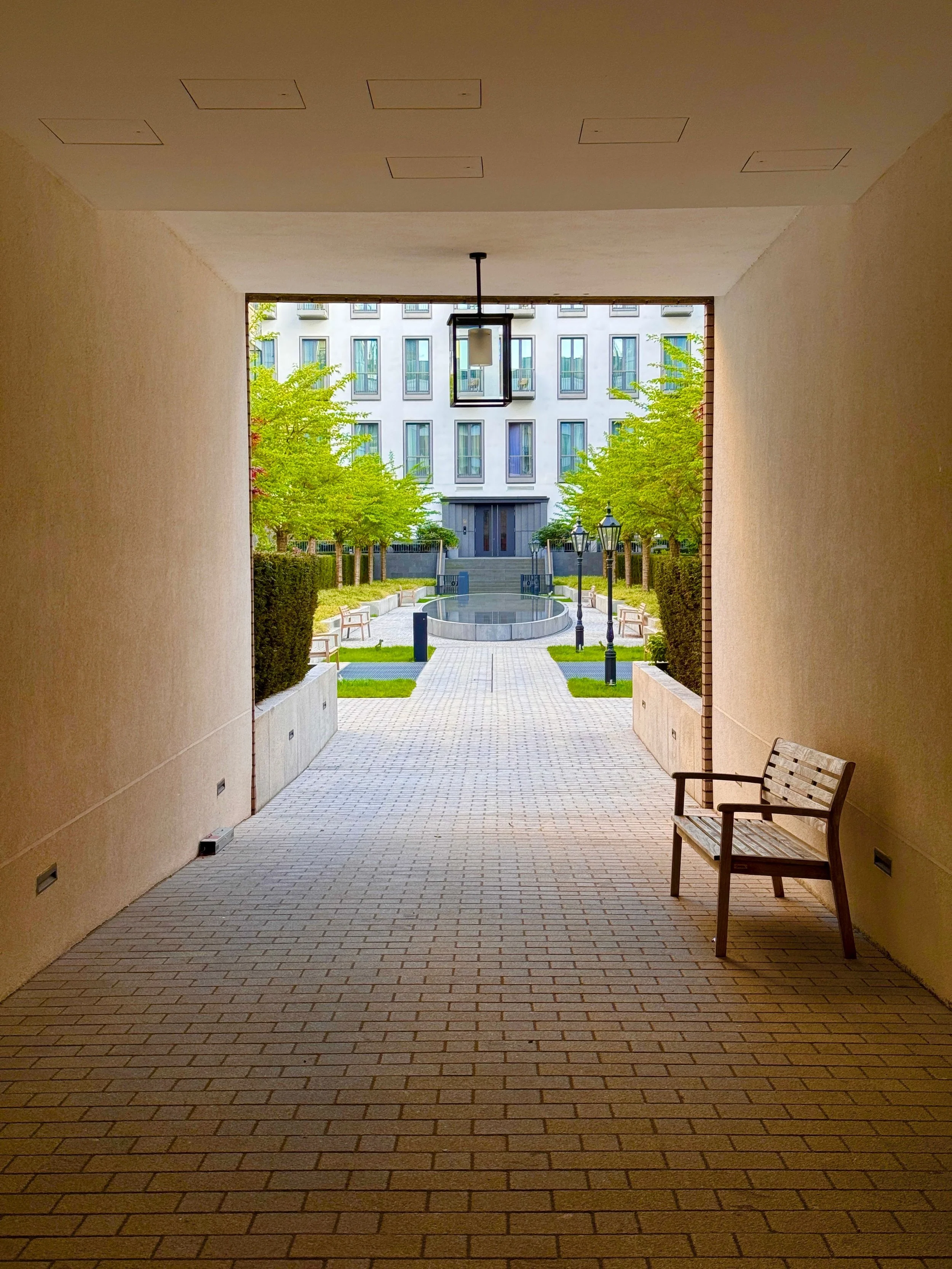
What Are Common Areas in an Ontario Condo?
Under the Condominium Act, 1998, common areas are all of the property in a condominium except the units. In plain terms, they are the shared spaces and systems that every owner collectively owns and collectively pays to maintain through condo fees. If something is not inside the legal boundary of an individual unit, it is almost certainly a common element.
Typical common areas in an Ontario condo include:
• Lobbies, hallways, stairwells, and elevators
• The roof, foundation, and exterior walls
• Grounds, walkways, visitor parking, and landscaping
• Shared mechanical systems such as boilers, pumps, and the main plumbing and electrical lines
• Amenity areas such as party rooms, gyms, and shared garages
The exact list for your building is defined in your declaration, not by a universal rulebook. Two corporations on the same street can draw the unit boundary in different places, which is why the declaration always governs the final answer.
What is the Difference Between a Unit and a Common Area?
A unit is the privately owned space whose boundaries are set out in your corporation's declaration, while a common element is the shared property owned collectively by all owners. The boundary is often a surface, for example the interior drywall, the subfloor, or the inside face of a window, but the precise line varies from corporation to corporation.
That single distinction drives three practical outcomes your board deals with constantly:
• Responsibility: who is required to maintain and repair the item
• Cost: whether the expense comes from the owner's pocket or the corporation's budget
• Insurance: whose policy is expected to respond after damage
Because the dividing line is a legal definition rather than common sense, boards get into trouble when they guess. For a deeper look at how these responsibilities split in everyday situations, read our guide: Who is Responsible for Condo Repairs in Ontario?
What are Exclusive-use Common Areas?
Exclusive-use common areas are common areas the corporation owns but that are set aside for the private use of one owner. Balconies, patios, terraces, assigned parking spaces, storage lockers, and front porches are the most common examples. The owner enjoys exclusive use of the space, but it legally remains corporation property, and that split is exactly what makes responsibility confusing.
This is where most board disputes start. An owner treats their balcony as fully private and assumes the corporation will repair it, or the corporation assumes the owner will handle everything. Neither assumption is automatically correct. The answer depends on what your declaration says about that category of element.
For a worked example of how these calls play out on common trouble spots, read our guide: Who Pays for Condo Windows & Balconies in Ontario.
Who Maintains and Repairs Common Areas, and Who Pays?
Generally, the corporation maintains and repairs the common areas while each owner maintains their own unit, but Ontario law lets the declaration shift some of that responsibility. This is not legal advice, but generally speaking under Ontario law, the Condominium Act, 1998 requires the corporation to maintain the common areas (section 90) and to repair both units and common areas after damage (section 89). Section 91 then allows the declaration to make owners responsible for maintaining and repairing the exclusive-use common areas they use, such as their own balcony or parking space.
Two more concepts decide who pays after damage:
• The standard unit by-law (section 56) defines what counts as a "standard unit" for repair and insurance purposes. Anything an owner adds above that standard, such as upgraded flooring or finishes, becomes their improvement to insure and repair.
• The corporation's insurance generally responds to damage to the common areas and the standard unit, while owners insure their own improvements and contents.
Because the standard unit definition sits at the center of these calls, it should be documented and easy for your manager to produce on request. For how this connects to your coverage, read our guide: Condo Corporation Insurance in Ontario: What Every Board Must Understand.
How Strong Management Keeps These Boundaries Clear
A capable management company does not wait for a dispute to figure out who owns what. Strong condo corp management starts with knowing exactly what the corporation owns: it works from your declaration and standard unit by-law, keeps a clear record of which areas are common, exclusive-use, or unit, and gives owners a consistent answer every time the question comes up. That consistency is one of the quiet differences between a manager who is genuinely on top of your corporation and one who simply reacts to whoever emails last.
If your current company cannot quickly tell you whether your balconies are exclusive-use common areas, or cannot point you to your standard unit by-law, that is a gap worth addressing. Boards across London Ontario and Sarnia Ontario come to Sapphire Condominium Management after years of vague answers and inconsistent enforcement, and clear, documented boundaries are usually one of the first things we put in order. Well-run condo management in London Ontario and condo management in Sarnia Ontario should protect the corporation's budget and take conflict off the shoulders of volunteer directors.
If you would like a second opinion on how your corporation's finances and reserve contributions reflect these responsibilities, Sapphire offers a free financial review at sapphirecondomgmt.ca/financial-review-on-us.
Frequently Asked Questions
Q: What are common areas in an Ontario condo?
A: Common areas are everything in a condominium except the units, as defined by the Condominium Act, 1998. They include lobbies, elevators, roofs, exterior walls, grounds, and shared building systems. All owners collectively own them and fund their upkeep through condo fees. Your declaration lists exactly what is common for your building.
Q: Who is responsible for maintaining exclusive-use common areas like balconies in Ontario?
A: It depends on your declaration. By default the corporation maintains the common areas, but section 91 of the Condominium Act, 1998 lets the declaration make owners responsible for the exclusive-use areas they use, such as balconies, patios, or parking spaces. Always check your declaration, since two corporations can handle this very differently.
Q: What is a standard unit by-law in an Ontario condo?
A: A standard unit by-law, allowed under section 56 of the Condominium Act, 1998, defines what counts as the "standard" unit for repair and insurance. It sets the line between what the corporation's insurance covers after damage and the upgrades an owner must insure themselves. Boards should keep this by-law current and accessible.
Related Reading
→ Who is Responsible for Condo Repairs in Ontario?
→ Who Pays for Condo Windows & Balconies in Ontario
→ Condo Corporation Insurance in Ontario: What Every Board Must Understand